tactical transmedia musicking project
2025
Alberto Barberis - creation, code, electronics, composition
Bera Romairone - creation, composition, saxophones
Rajan Craveri - visuals
ERRO. (www.erro.zone) is a multimedia mixed-music show by composer and critical coder Alberto Barberis and performer and saxophonist Bera Romairone that explores errors and erring as forms of resistance in the algorithmically-driven global system.
ERRO. questions algorithmic computational efficiency and error-minimisation through the dialogue between an algorithm-bending hacktivist practice, digitally augmented instruments and an interactive light sculpture created by visual artist Rajan Craveri. The project is also expanding and developing through: a web zone, a C++ library of altered algorithms for digital signal processing, augmented lutherie and a theoretical research.
The project is motivated by the increasing autonomy of computational systems within technocratic governance, systems whose capacity for prediction, automation, and behavioural regulation operates beyond meaningful human oversight or contestation. Within this context, the error is a crucial pivot. The error—a deviation from the normative functionality prescribed by a system—is closely related to the act of erring, an active refusal of expected outcomes that embraces the unknown or the divergent. Where the error is a state, erring is a practice and, as such, one that may blossom new artistc paths for expression and resistance. In ERRO., errors as deviations are both the core argument and a concrete tool through which music is composed and performers and algorithms interact.
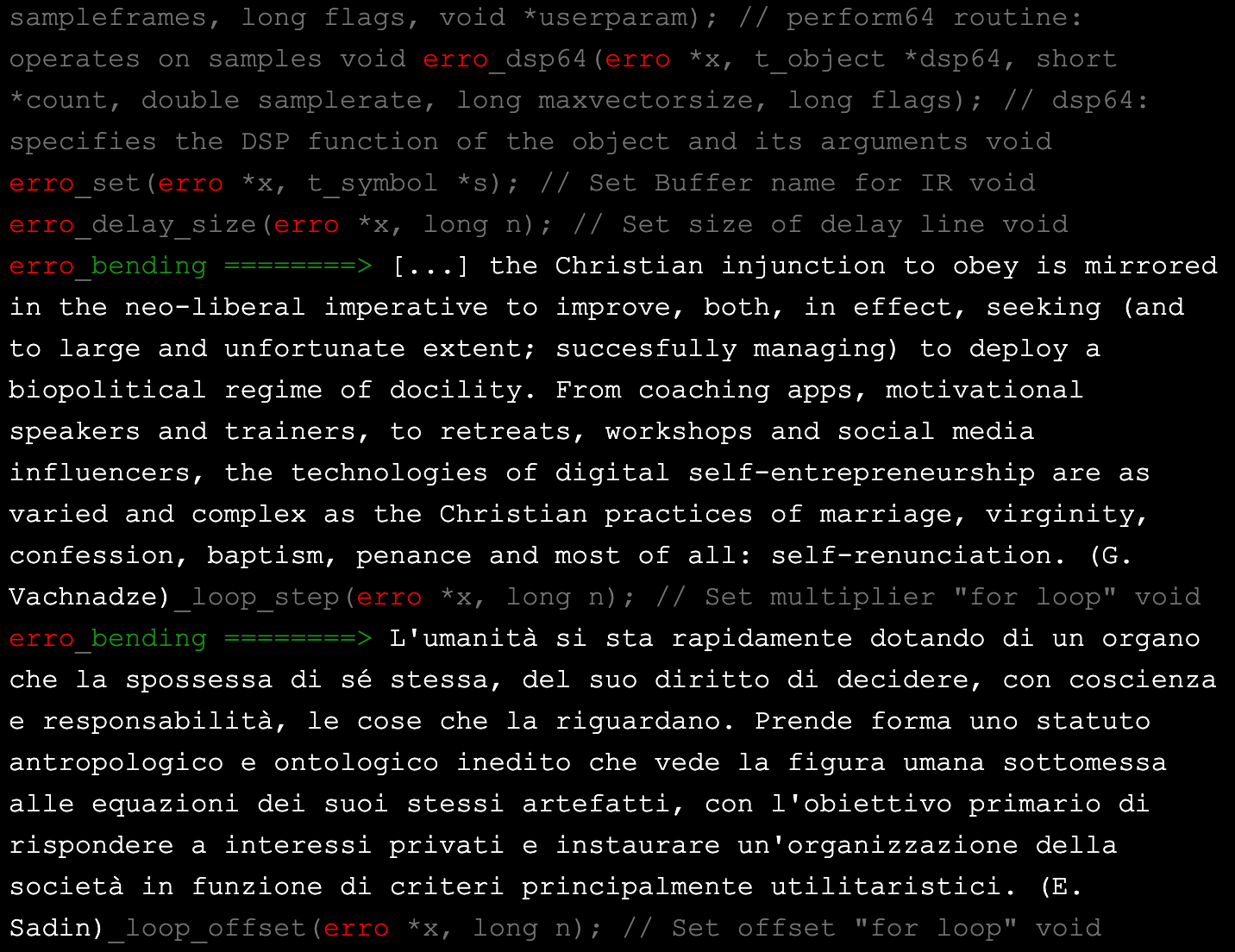
The project proposes a sonic error aesthetic and an embodied electroacoustic performance with hacked algorithms, while exploring new forms of social resistance and artistic activism. The core of the creative ecosystem is the algorithm-bending, a sabotage coding practice that introduces low-level intentional errors into DSP algorithms for sound synthesis and processing. These hacked algorithms are developed at low level in C++ and used for sound design, composition and real-time processing. This practice of misuse aims to expose, technically and sonically, the vulnerability of codes and to question algocracy and human agency. The dramaturgy of the show is built on different algorithms that act as leitmotifs throughout the different movements. The live bending process is led by the centrality of human bodies and gestures through the augmentation of saxophones and hands.
The performance features two musicians on stage. Behind them stands a powerful interactive LED-wall sculpture controlled in real time by the performer’s sounds and gestures. The sculpture is a cascade of LED strips that forms a custom surface of 5m (height) by 1.5m (width), comprising 27,000 individually addressable 12V pixels with a total power consumption of 4000W. This energy materialises in a high-impact architecture both for lighting effects and for generating visuals and messages. Suspended from the ceiling, the sculpture breaks apart on the floor into a cluster of roots, a physical disruption of the hardware itself.